KitchenAId
From fridge fright to culinary delight. What can I cook with what I already have? Most recipe platforms start with a dish and then check the ingredients. KitchenAId flips this: you start with your fridge, and the AI builds the recipe.
- Role
- Initial idea proposal and front end
- Team
- Three people, with Oliver Skúli Thull and Lauren Thor Zerbin
- Context
- Human-Centered AI with Prof. Niklas Elmqvist, Aarhus University
- Methods
- Prompt design, user study
How it works
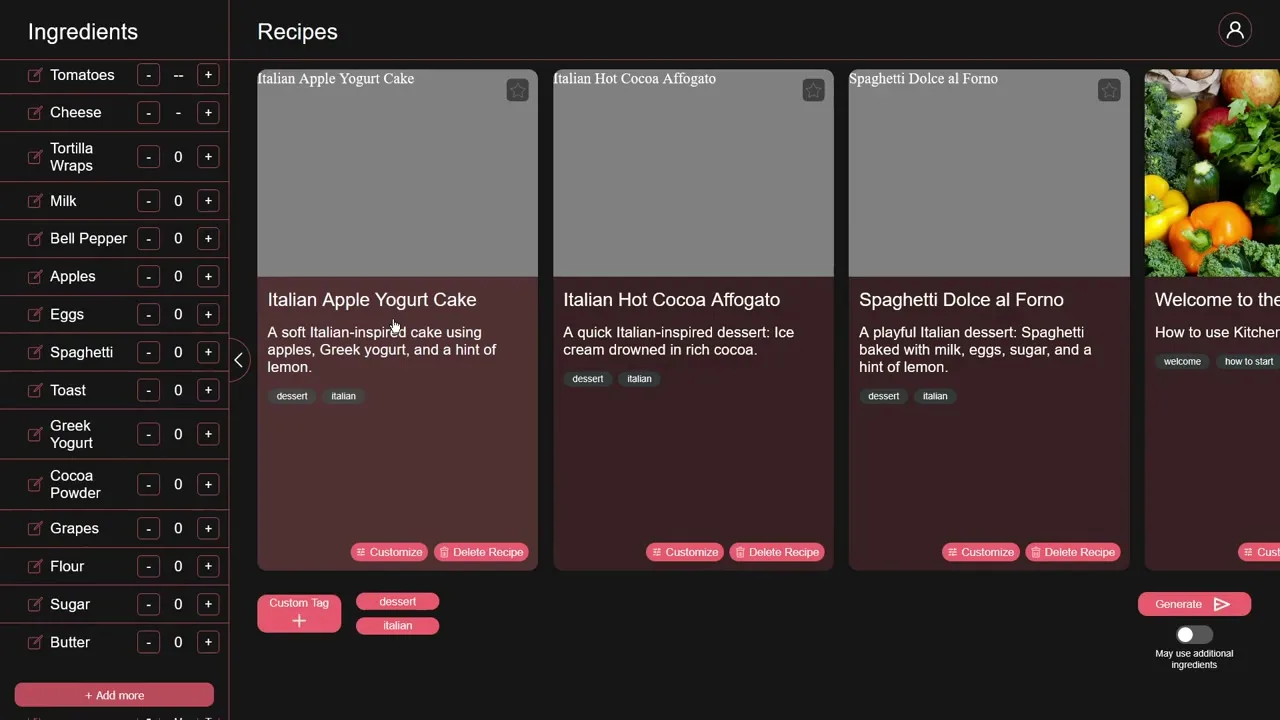
On first use, the app asks for your allergies, diet and kitchen utensils. You then add the ingredients you have, and can prioritise some, such as ones about to expire. You choose whether the AI may add ingredients you didn’t list.
Free-text tags such as “Italian dessert” or “easy to make” steer the result. Recipes appear as recipe cards instead of a chat log, and you can adjust them afterwards with a short prompt.
Under the hood
A structured prompt makes a large language model act as a chef. It always avoids allergens, respects preferences and utensils, follows the tags, and returns strict JSON that the app can render directly.
Evaluation
We ran a user study with participants rating clarity, efficiency, excitement and inventiveness. Feedback was positive overall. Users also wanted saved favourites and filters, and mismatched recipe images and some ingredient edge cases showed where to improve.
Next steps
We identified user accounts, a shopping list generator, a meal planner and a barcode scanner as next steps.